INTRODUCTION: THE OLD END OF THE ISLAND THAT BECAME SOMEWHERE WORTH LIVING
Lachine was long seen as the back end of the island — an industrial borough, far from downtown, vaguely forgotten. That era is over. In recent years, Lachine has undergone a radical transformation making it one of Montreal's most dynamic neighbourhoods. The Lachine Canal, the St. Lawrence River banks, the waterside cycling path, new craft breweries, ambitious residential projects and above all — the arrival of the REM — have turned Lachine into a booming area that even the most experienced real estate professionals are watching closely.
The data is clear. In 2025, Lachine recorded some of the highest rent increases on the entire island of Montreal: +27.8% for one-bedroom units and +18.7% for two-bedroom units in a single year. These are not trivial numbers. They signal demand far outpacing supply and a borough rapidly repositioning itself in Montreal's residential hierarchy.
This complete guide covers the current rental market reality, the neighbourhood's advantages, ongoing projects, the resident profile and transportation options.
RENTAL PRICES IN 2025-2026
Lachine has moved from a very affordable market to a fast-rising intermediate one. While prices remain below those of Verdun or the Plateau, the trend is sharply upward.
Studio / bachelor (2½): $1,000 to $1,300 per month1 bedroom (3½): $1,100 to $1,500 per month (up sharply, +27.8% year-over-year)2 bedrooms (4½): $1,400 to $1,900 per month (up +18.7% year-over-year)3+ bedrooms (5½+): $1,700 to $2,300 per month
According to Centris, Lachine's rental market saw the strongest growth on Montreal Island in 2025 for one- and two-bedroom units. This momentum is directly attributable to the arrival of the Lachine REM station, the Canal's revitalization and the influx of new residents discovering the area.
For new or recent rental condos near the canal or the future REM station, prices can easily exceed $2,000 for a two-bedroom. Despite these increases, Lachine remains 15 to 20% less expensive than comparable neighbourhoods like Le Sud-Ouest or Verdun.
THE ADVANTAGES OF LIVING IN LACHINE
1. The Lachine Canal: A Natural Gem at Your Door
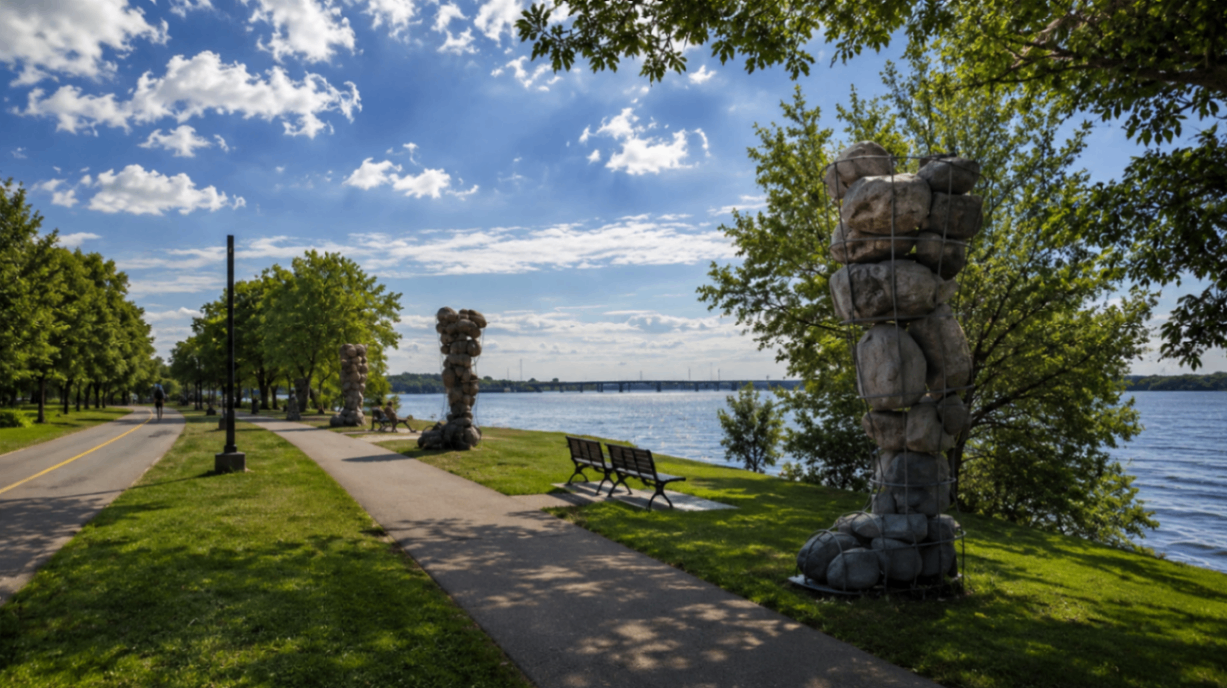
The Lachine Canal is the neighbourhood's defining asset. Inaugurated in 1825, this historic canal is today a 14.5-kilometre recreational corridor managed by Parks Canada, stretching from Lachine to Old Montreal. The cycling path along it is one of Montreal's most popular, linking the borough to downtown entirely by bike. Kayaks, paddleboards and water activities are available in season. In winter, a section of the canal is maintained for skating.
2. The St. Lawrence River and Lachine Marina
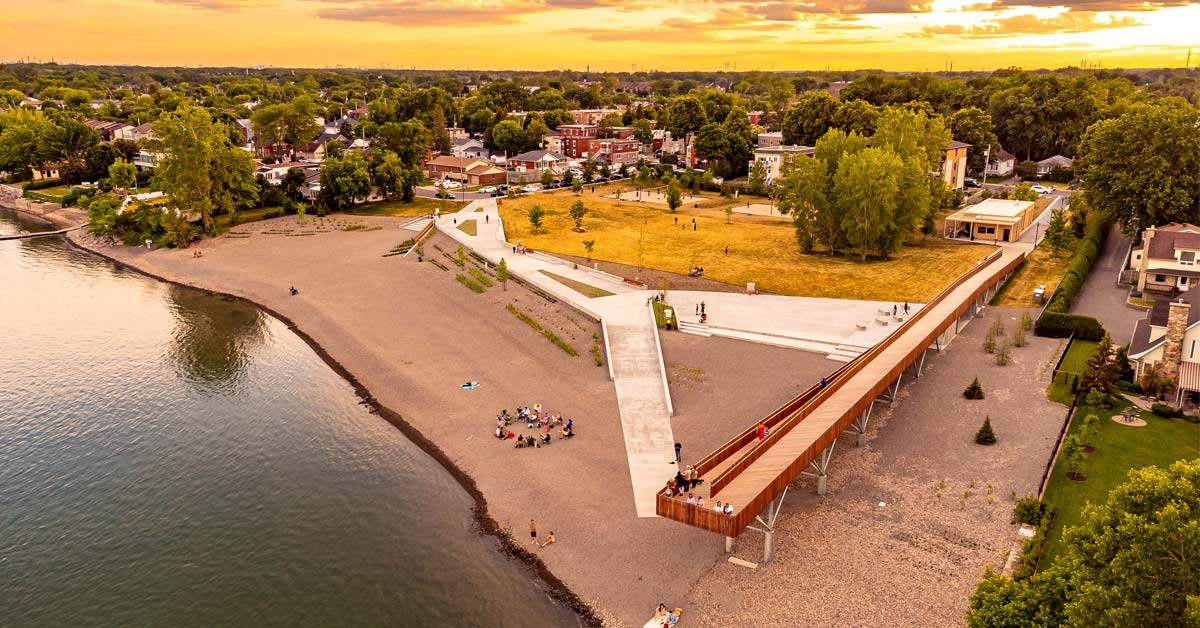
Lachine is bordered to the south by the St. Lawrence River. The Lachine Marina, one of the largest in the greater Montreal area, hosts hundreds of vessels each summer. Riverside parks, picnic areas and exceptional views over the river and the Lachine Rapids are part of daily life here. Parc René-Lévesque, a verdant peninsula extending into the river, is one of the most unique green spaces on the entire island.
3. A Strong Historical and Architectural Identity
Lachine is one of Montreal's oldest areas — founded in 1667, it is one of the island's oldest colonial settlements. This history is visible in its architecture: 18th- and 19th-century stone homes, red-brick industrial buildings converted into lofts and cultural spaces, and a charming Old Lachine district with cobblestone streets and heritage buildings. The Lachine Museum, housed in 17th-century buildings, is one of Quebec's oldest museums.
4. A Booming Food and Cultural Scene
Lachine's commercial revitalization is visible in its culinary scene. New craft breweries, restaurants, cafés and neighbourhood shops have opened along rue Notre-Dame and along the canal in recent years. The borough has come back to life socially and culturally, with seasonal markets, riverside events and an emerging local arts scene. This movement echoes, on a smaller scale, the transformation Saint-Henri went through fifteen years ago.
5. The Lachine-Est Eco-Neighbourhood: A Major Transformation Project
The City of Montreal officially adopted the Lachine-Est eco-neighbourhood special urban planning program (PPU) in June 2023. This project aims to transform an approximately 70-hectare industrial zone — between the Lachine Canal, rue Victoria, 6th Avenue and CP rail lines — into a new mixed-use, ecological and inclusive residential neighbourhood. The plan calls for 7,800 new housing units at full build-out (over at least 20 years), 10 hectares of parks and public spaces (22% of total developable area), a green and blue mobility network, and the enhancement of existing industrial heritage. Implementation began in 2025.
6. The Lachine REM Station: A Direct Connection Under Development
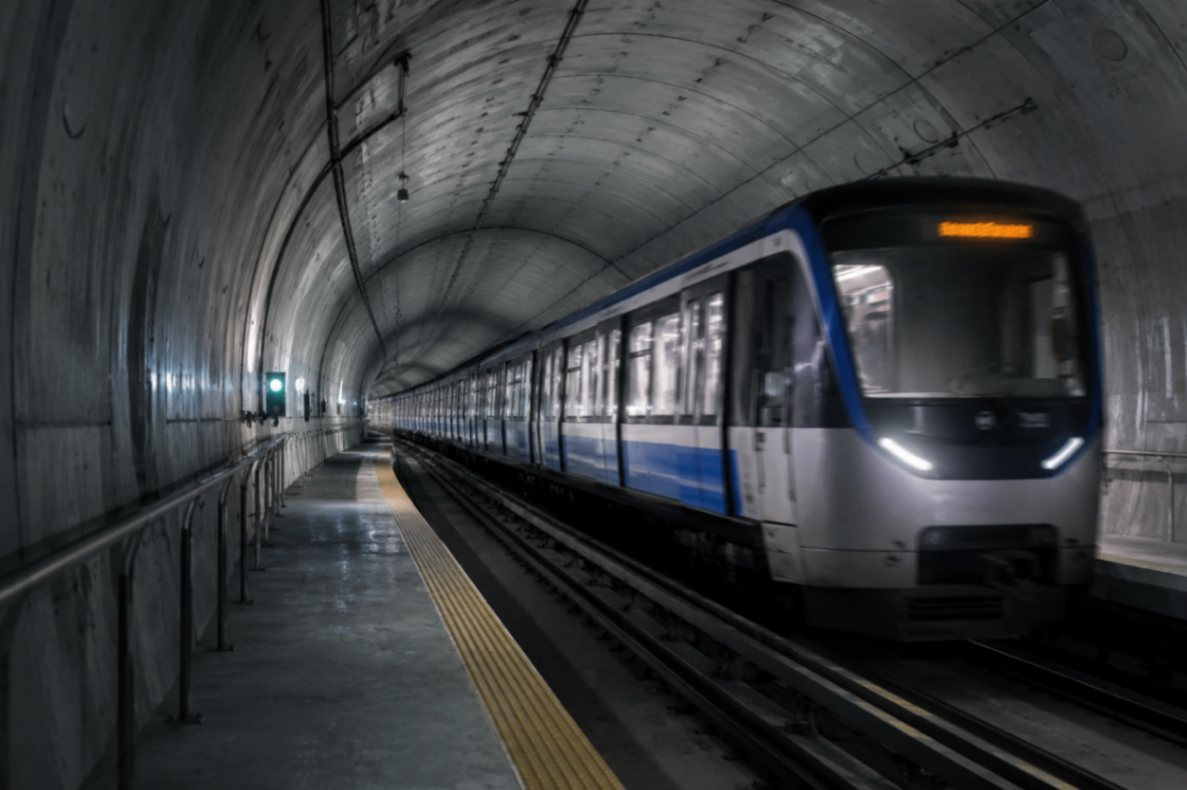
The Lachine REM station is under development as part of the Anse-à-l'Orme branch. Opening is expected in 2026, which will connect the borough to downtown Montreal's Gare Centrale and several West Island stations. This connection will fundamentally change how Lachine is perceived as a neighbourhood in terms of commuting distance.
ONGOING DEVELOPMENTS AND PROJECTS
LACHINE-EST ECO-NEIGHBOURHOOD (2025 and beyond)
The Lachine-Est project is the largest urban transformation initiative in the borough in decades. Implementation officially began in 2025 with zoning regulation revisions, technical infrastructure analyses, ongoing discussions with the school board about educational services in the new neighbourhood, and citizen consultations on vision and design.
VILLAGE URBAIN — CO-HOUSING PROJECT (rue Notre-Dame)
A pioneering co-housing project was launched on rue Notre-Dame in Lachine with close to $2 million in federal funding. This 58-unit building (one-, two-, three- and four-bedroom units) across 3 to 4 floors includes 16 affordable condos sold at cost and 42 non-market rental units. It is the first project of its kind in the Montreal area, inspired by existing models in Quebec City and Neuville.
REM — ANSE-À-L'ORME BRANCH (2026)
The future Lachine REM station, part of the Anse-à-l'Orme branch, is under development with opening expected in 2026. This will integrate Lachine into one of Canada's most modern public transit networks.
TRANSPORT AND CONNECTIVITY
By Car
- Highway 20: east-west access across the island, connections to Highways 13 and 40- Downtown Montreal: 20 to 30 minutes- Montreal-Trudeau Airport: 10 to 15 minutes — one of the shortest distances on the island- Mercier Bridge: access to the South Shore, 10 to 15 minutes
STM Bus
Several bus routes serve Lachine, with connections to Angrignon metro station (Green Line) in 15 to 25 minutes.
Cycling
The Lachine Canal cycling path allows the trip to Old Montreal entirely by bike in 45 to 60 minutes, never leaving the dedicated path. It is one of Montreal's most appreciated cycling infrastructures.
REM — Anse-à-l'Orme Branch (2026)
The future Lachine REM station represents the most significant change for borough mobility. It will connect Lachine to Gare Centrale and the full REM network, transforming the perception of the neighbourhood in terms of travel time.
CONCLUSION
Lachine is undergoing exactly the same transformation that Saint-Henri and Verdun experienced ten to fifteen years ago — but with the canal, the river, exceptional industrial heritage and an REM station added to the mix. Rents have already started rising sharply, but a window remains to settle in a rising neighbourhood before prices catch up to adjacent boroughs. For urban adventurers, cyclists, history lovers and anyone seeking quality waterfront living in Montreal, Lachine is a choice that will age very well.
Sources: Centris, CMHC, Ville de Montréal (PPU Lachine-Est 2023), REM, Statistics Canada (2021), CBC, CTVLast updated: May 2026
Lifestyle
Lachine: Canal, River, REM — And Rents Rising Faster Than Anyone Expected
5/8/2026 • Lachine • By Rentack