INTRODUCTION: THE NEIGHBOURHOOD MONTREAL TOOK TOO LONG TO NOTICE
Tucked at the eastern tip of Montreal Island, between Saint-Léonard and Highway 25, the borough of Anjou is one of the city's most underrated residential areas. Founded in 1956 as one of Montreal's first fully planned suburban-style neighbourhoods, Anjou today offers something increasingly rare: space, stability, accessible prices and strong infrastructure access.
And it's about to change. The future Anjou metro station — the terminus of the Blue Line extension — is currently under construction beneath Highway 25. When it opens, expected in 2029, Anjou will become one of the only affordable Montreal boroughs with a direct metro connection. That combination is exactly what investors, savvy renters and families are watching for, hoping to get in before prices catch up to the rest of the city.
This complete guide covers current rental prices, the neighbourhood's advantages, ongoing projects, its resident profile and transportation options.
RENTAL PRICES IN 2025-2026
Anjou is one of Montreal's most affordable rental markets among well-located boroughs. Rents are considerably lower than in central neighbourhoods, while units tend to be more spacious.
Studio / bachelor (2½): $750 to $1,000 per month
1 bedroom (3½): $1,000 to $1,300 per month
2 bedrooms (4½): $1,200 to $1,600 per month
3+ bedrooms (5½+): $1,500 to $1,900 per month
According to REALTOR.ca, apartments in Anjou start from $1,050 per month, with overall averages among the most competitive on the island. Centris data from early 2025 confirms the average rent for a 2-bedroom in Anjou is around $1,546 — well below the Montreal two-bedroom average. One-bedroom rents even saw a notable year-over-year decrease (-10.13%), a sign of a market still finding its equilibrium before the metro opens.
Anjou is one of the last places on Montreal Island where a family can rent a 3-bedroom unit with parking and a yard for under $1,800 per month. This reality will not last indefinitely, particularly once the metro station opens.
Comparison with other Montreal neighbourhoods (average 2-bedroom rent):
- Anjou: $1,200 to $1,600 — great value, metro under construction
- RDP-PAT: $1,100 to $1,450 — most affordable on the island
- Saint-Léonard: $1,200 to $1,550 — comparable, but no future metro
- Rosemont: $1,600 to $2,100 — considerably more expensive
- Plateau-Mont-Royal: $1,900 to $2,600 — premium market
THE ADVANTAGES OF LIVING IN ANJOU
1. A Fully Planned Neighbourhood with Wide Streets and Parks
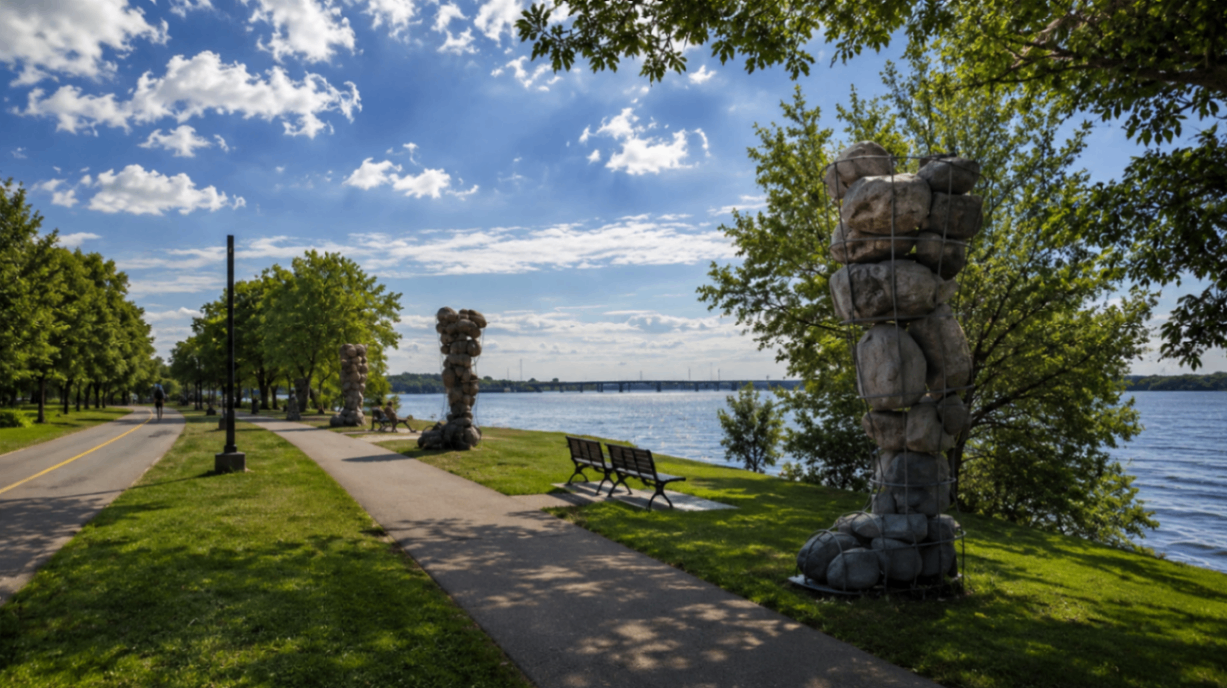
Unlike the densely built central neighbourhoods, Anjou was planned from the 1950s with a suburban logic: wide streets, neighbourhood parks, large yards and abundant parking. Single-family homes, semi-detacheds and low- to mid-rise apartment buildings, often surrounded by greenery, make up the fabric. Parc Lapalme, Parc des Nations and several nearby green spaces are part of everyday life in the borough.
2. Galeries d'Anjou: Everything Within Reach
One of Montreal's largest shopping centres, Galeries d'Anjou, is located at the heart of the borough. With over 200 stores and services — including IGA, Staples, a cinema, medical clinics, restaurants and specialty shops — it represents an exceptional service hub accessible on foot or by bike for many residents. Supermarkets, pharmacies, banks and clinics of all kinds line the major commercial arteries such as Boulevard des Galeries-d'Anjou.
3. Remarkable Highway Access
Anjou is bordered by three of Montreal's most important highways: Highway 25 (access to Laval and the South Shore), Highway 40 to the north and the Métropolitaine expressway linking the east and west of the island. For commuters who need to travel by car, Anjou is one of the best-connected points on the island. Montreal-Trudeau Airport is accessible in 25 to 35 minutes.
4. A Stable, Well-Equipped Family Neighbourhood
Anjou offers a complete network of primary and secondary schools, daycares (CPEs), arenas, outdoor pools, sports parks and community centres. The stable residential fabric, with a high ownership rate, creates a safe, well-maintained neighbourhood atmosphere ideal for families with children.
5. The Blue Line Extension: A Historic Catalyst
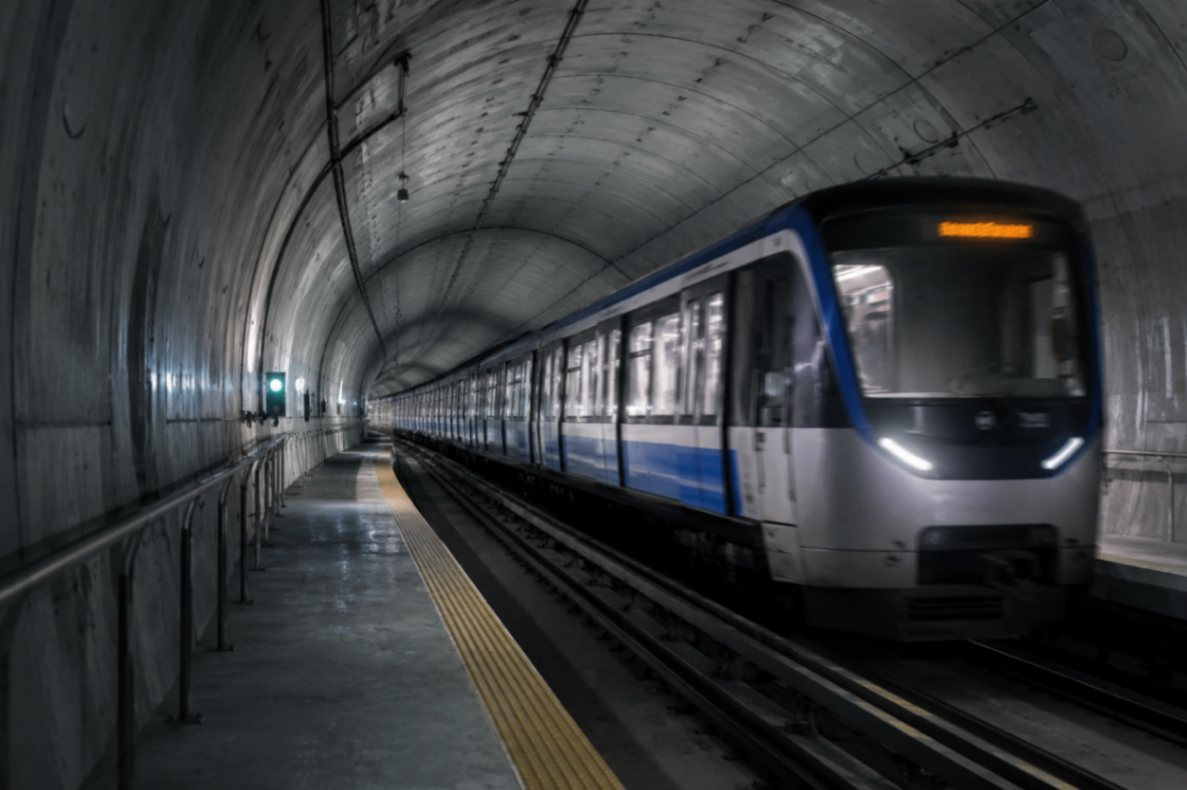
This is the most transformative project for Anjou since its founding. The future Anjou station will be the terminus of the Blue Line extension, built directly under Highway 25. According to the Quebec government, service is scheduled for 2029, at a total cost of $6.4 billion. This station will give Anjou its first-ever direct access to Montreal's metro network, linking the borough to stations Viau, Lacordaire, Langelier, Pie-IX and the rest of the Blue Line (with correspondences to the Green, Orange and Yellow lines). The impact on real estate and rental prices within 500 to 1,000 metres of the future station will be significant.
6. Proximity to Saint-Léonard and East Montreal
Anjou is directly adjacent to Saint-Léonard, providing easy access to an even broader range of commercial and service options, including several large-format grocery stores, community services and lively commercial strips. For everyday purposes, the boundary between the two boroughs is barely noticeable.
ONGOING DEVELOPMENTS AND PROJECTS
BLUE LINE METRO EXTENSION — ANJOU STATION (2025-2029)
The Anjou station worksite is actively underway. Information sessions were held in March and June 2025 to inform residents about construction progress. The Anjou workshop and underground garage are also under construction near Parc Talcy. The station will be built beneath Highway 25, with two entrance buildings, one east of the A-25. Service is confirmed for 2029.
A good neighbour committee has been set up by the STM to allow nearby residents to participate in discussions about integrating the project into the neighbourhood. Urban forestry work was carried out around the worksites in 2024 and 2025.
RESIDENTIAL DEVELOPMENT AROUND THE FUTURE STATION
The station announcement has already generated increased interest from real estate developers. The area surrounding the future Anjou station is expected to see progressive densification in the years following opening, with new condo and transit-oriented rental projects. Investors are already positioning land acquisitions in the Blue Line corridor.
COMMUNITY INFRASTRUCTURE
The borough continues to invest in its parks and sports infrastructure, with ongoing renovation and improvement projects in several neighbourhood parks. The cycling network is also expanding.
WHO LIVES IN ANJOU?
Anjou is an established, predominantly French-speaking residential borough with a strong family profile. The borough has approximately 42,000 residents across 13.7 km² — one of Montreal's smallest boroughs by land area.
The neighbourhood appeals primarily to:
- Established families who appreciate spacious units and nearby parks
- Young families looking to settle on the island at an accessible price
- Renters who work in Laval (quick access via the A-25) or in eastern Montreal
- Real estate investors anticipating post-metro price appreciation
- Professionals who rely on a car and need easy highway access
TRANSPORT AND CONNECTIVITY
STM Bus Network
Anjou is served by several STM bus routes, including express lines connecting the borough to existing metro stations on the Green Line (Honoré-Beaugrand) and the Orange Line. Key routes include:
- 22 and 32: local north-south service
- 141 Jean-Talon Est: connection east toward Saint-Léonard
- 439 Express Anjou: fast connection to the existing metro
By Car
- Highway 25: access to Laval (Île-aux-Tourtes bridge) and the South Shore (Louis-Hippolyte-La Fontaine Tunnel) — 15 to 25 minutes
- Highway 40: east-west link across the island
- Downtown Montreal: 20 to 30 minutes depending on traffic
- Montreal-Trudeau Airport: 25 to 35 minutes
Future: Anjou Metro Station (Blue Line, 2029)
The opening of Anjou station in 2029 will fundamentally transform mobility in the borough. It will allow residents to reach downtown Montreal (McGill or Berri-UQAM stations) without a car in under 30 minutes, with connections to the entire Montreal metro network. This is the most anticipated transit project in eastern Montreal in decades, with real estate appreciation effects already visible in the construction corridor.
CONCLUSION
Anjou is the Montreal neighbourhood that offers the best strategic positioning for the years ahead. Affordable today, well connected by highway, stable and family-friendly, it is about to become directly linked to the metro network for the very first time. For renters who want to take advantage of current low prices before post-metro appreciation, and for families seeking space without leaving the island, Anjou belongs at the top of the list.
Sources: STM, Government of Quebec, REALTOR.ca, Centris, Statistics Canada (2021), Ville de Montréal
Last updated: May 2026