Signing a lease is one of the most important things you'll do as a renter. In Quebec, this process is more standardized than in most other provinces — which actually works in your favour, if you know how to use it.
Here's a plain-language guide to reading your Quebec lease before you sign anything.
Quebec Uses a Mandatory Government Lease Form
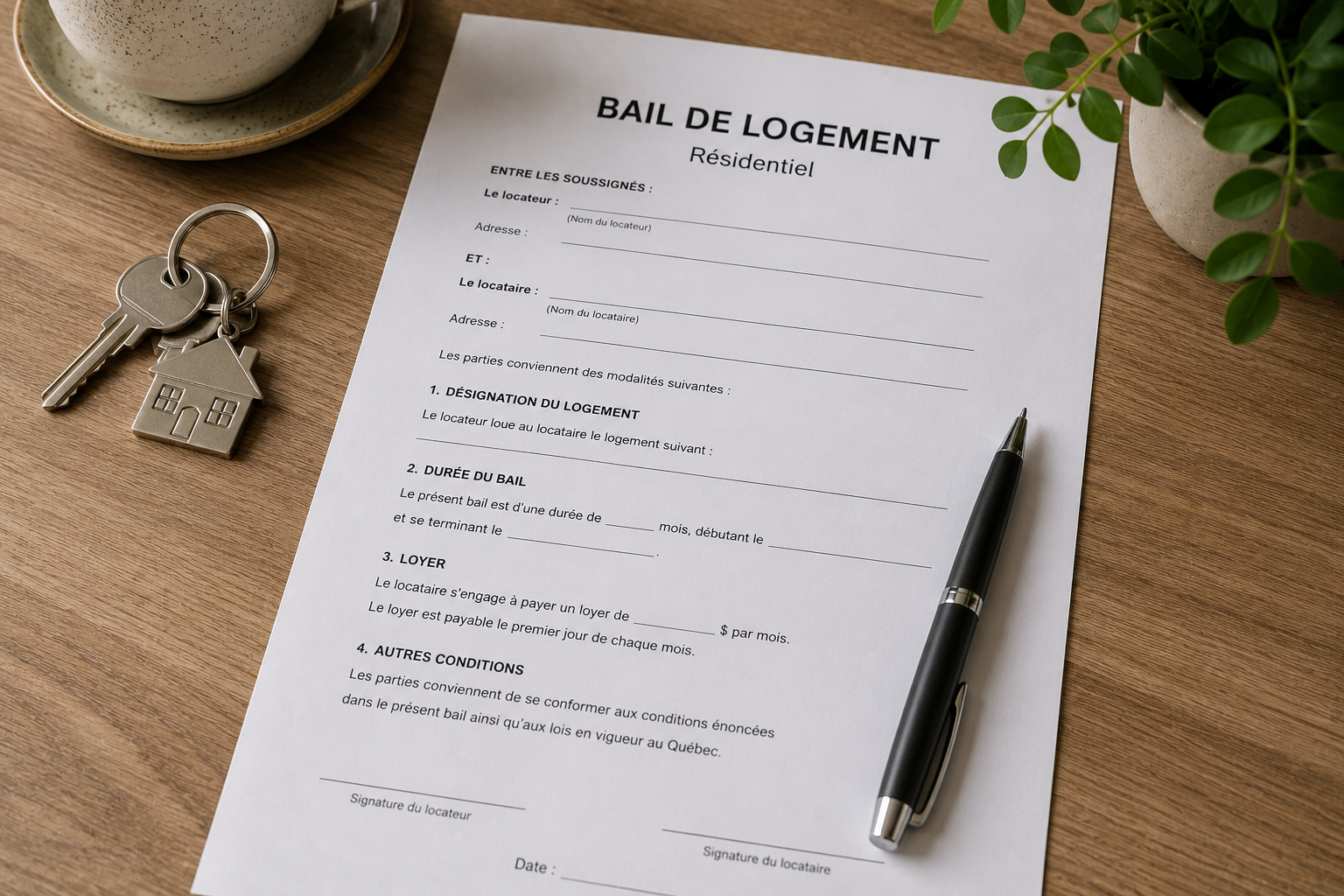
Unlike many other provinces where landlords draft their own lease agreements, Quebec requires all residential landlords to use the official government lease form — known as the Bail obligatoire or Bail de logement. This form is produced by the Tribunal administratif du logement (TAL), the province's housing tribunal.
This standardized form has been in use since September 1996. Any residential lease that does not use this form may not be valid. If you're shown a custom document instead of the standard TAL form, that's a red flag worth raising.
You can download the official form directly from the TAL website at tal.gouv.qc.ca.
A Section-by-Section Guide
Section A — Identification of the Parties Names and contact information for both the landlord and the tenant. Make sure all names are spelled correctly and that the landlord listed is actually the registered owner or their authorized agent.
Section B — Description of the Dwelling The address, type of dwelling, floor, and apartment number. Verify this matches exactly where you're renting — errors here can cause problems later.
Section C — Services and Conditions This is one of the most important sections. It lists which services are included in the rent: heating, hot water, electricity, parking, appliances, etc. Read every line carefully. If your landlord told you something is included but it isn't checked off here, get it corrected before signing.
Section D — Rent The monthly rent amount, the payment due date, and the method of payment. Important: in Quebec, a landlord cannot require post-dated cheques or cash-only payments. They also cannot demand last month's rent upfront — only the first month.
Section E — Duration of the Lease Start date, end date, and whether the lease is fixed-term (most common: 12 months) or indeterminate (month-to-month). In Quebec, a fixed-term lease renews automatically at the end of its term unless proper written notice is given by either party.
Section F — Special Clauses Any additional conditions agreed upon by both parties. This section is where landlords sometimes add clauses about pets, smoking, noise, or subletting. You can negotiate these terms before signing — but once you sign, they are binding.
What a Landlord Cannot Put in Your Lease
Quebec law is protective of tenants. Regardless of what a lease says, certain provisions are unenforceable:
- A clause waiving your right to renew your lease
- A requirement to pay a security deposit or damage deposit (these are illegal in Quebec — only the first month's rent can be requested upfront)
- A clause that eliminates your right to sublet (though conditions can be added)
- Any term that removes rights guaranteed to you under the Civil Code of Québec
If a landlord includes any of these clauses, they are null and void — even if you sign the lease.
Your Right to a Signed Copy
Once both parties have signed, the landlord is required by law to give you a signed copy of the lease within 10 days. Keep this document in a safe place for the duration of your tenancy and after. You will need it if any dispute arises.
One More Thing: The Previous Rent Rule
When you move into an apartment in Quebec, your landlord is legally required to disclose the lowest rent charged in the previous 12 months for that unit. This is to prevent landlords from dramatically increasing rents between tenants. If the disclosed rent is lower than what you're being asked to pay, you have the right to contest it with the TAL within 10 days of signing.
Find your next apartment in Quebec — browse verified listings at Rentack.com.
Sources: Civil Code of Québec, Book V (Lease of Residential Immovables); Tribunal administratif du logement (TAL) — tal.gouv.qc.ca; Éducaloi — educaloi.qc.ca; Gouvernement du Québec — quebec.ca