
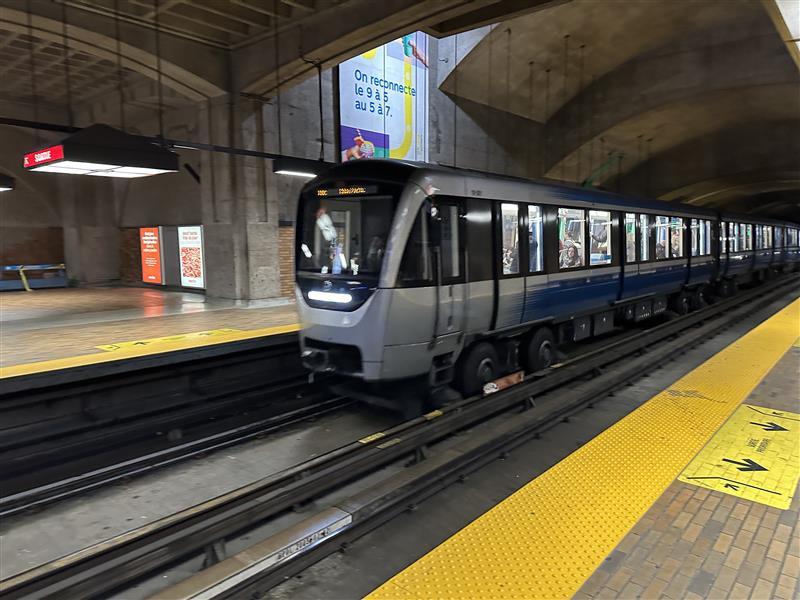
“Near transit” is one of the most overused phrases in Montréal rental listings — and one of the least clearly defined. In 2026, many renters pay a premium for transit access without fully understanding what they’re buying, while others overlook excellent options because they don’t fit outdated assumptions.
This guide cuts through the noise. Instead of listing every metro line or naming stations, it focuses on what actually improves daily life for renters: reliability, flexibility, door-to-door time, and how transit access interacts with rent, unit quality, and lifestyle.
If you’re renting near public transit in Montréal today, these are the factors that matter.
“Near Transit” ≠ “Good Transit”Distance alone is a poor proxy for usefulness. A unit three minutes from a station with frequent delays may perform worse than one ten minutes away on a reliable line.
In 2026, the most important transit qualities are:
Consistency (predictable schedules)
Frequency (short wait times)
Directness (few or no transfers)
Redundancy (backup options when something fails)
Renters who evaluate transit this way avoid overpaying for access they don’t actually benefit from.
Metro Access: Still the Gold Standard (With Caveats)The metro remains Montréal’s most reliable transit option. For renters without cars, it often defines feasible neighborhoods.
What metro access does well
Predictable travel times
High frequency during peak hours
Weather-proof commuting
Where renters overpay
Paying a premium to be immediately next to a station
Ignoring noise, foot traffic, and older building stock
Overlooking stations that add transfers rather than simplify commutes
In practice, being 8–12 minutes’ walk from a well-connected station often delivers better value than living right on top of it.
Bus Corridors: Underrated When Chosen CorrectlyBus access has improved substantially in recent years, but quality varies widely by route.
High-frequency corridors with dedicated lanes can rival metro access for many commutes. However, not all bus routes are created equal.
Strong bus access looks like
Frequent service throughout the day
Simple, linear routes
Connections to major employment hubs
Weak bus access looks like
Infrequent service
Multiple transfers
Heavy traffic exposure
Renters who dismiss buses entirely often miss well-priced units with excellent real-world access.
REM and Regional Transit: Powerful, but Context MattersRegional transit options can be transformative — or frustrating — depending on where you live and work.
They perform best when:
Your origin and destination align directly
Schedules are frequent enough for your lifestyle
The system integrates smoothly with local transit
They perform poorly when:
Transfers are unavoidable
Schedules are rigid
Service gaps exist outside peak hours
Before paying a premium, renters should simulate a full commute, not just look at a map.
Door-to-Door Time Beats Map DistanceOne of the most common renter mistakes is measuring transit access by straight-line distance.
What matters is:
Walk time to the stop
Wait time
In-vehicle time
Transfer penalties
Final walking distance
A slightly farther unit with a one-seat ride often beats a closer unit that requires two transfers.
When Transit Access Isn’t Worth the PremiumNot every renter benefits equally from transit proximity.
You may be overpaying if:
You work remotely most days
Your job hours fall outside peak service
You rarely travel downtown
You own a car and use it daily
In these cases, renters often find better value by prioritizing space, unit quality, or neighborhood amenities over transit labels.
Neighborhood Context Still MattersTransit does not exist in isolation. The surrounding neighborhood affects whether access translates into quality of life.
Ask:
Are daily errands walkable?
Is the area active or congested?
Does transit access improve flexibility or add stress?
Strong transit in an inconvenient environment rarely feels like a win long-term.
A Smarter Way to Evaluate Transit ValueBefore committing, renters should:
Run a real commute simulation (not just Google Maps once)
Check frequency outside peak hours
Evaluate walking conditions year-round
Compare total rent vs time saved
Consider backup routes
This approach reveals true value — and prevents regret.
Final ThoughtsIn 2026, renting near public transit in Montréal is less about proximity and more about function.
The best rentals don’t just look well-connected — they make daily life smoother. Renters who evaluate transit strategically avoid paying premiums that don’t pay back.
Good transit is a tool. Use it intentionally.