Gaspé holds a unique place in Quebec's rental landscape. The administrative capital of the Gaspésie region, home to the Cégep de la Gaspésie et des Îles, and the gateway to one of eastern North America's most spectacular natural territories, Gaspé has recorded vacancy rates close to zero for several years running — a situation without precedent among comparable Quebec cities. Here's the full picture.
The Numbers: A Market Near Absolute Zero
CMHC and regional sources document the following:
2021 — Vacancy: 1.0% 2022 — Avg. rent: $623/month | Vacancy: 0% (absolute zero) 2023 — Avg. rent: $703/month | Vacancy: 1.0% | Rent change: +12.8% October 2024 — Vacancy: 0.3%
A 0% vacancy rate in 2022 means the CMHC found literally no rental unit available for rent across the entire city at survey time. Even at 0.3% in 2024, you're talking about two or three units available across the whole rental stock — at most.
The 12.8% rent increase between 2022 and 2023 — from $623 to $703/month — ranked among Quebec's steepest single-year increases for that period, per FRAPRU's compilation. The Observatoire GÎM (the Gaspésie–Îles-de-la-Madeleine regional observatory) confirms that since 2020, vacancy rates across the region's municipalities with more than 2,500 residents have consistently hovered near zero.
For renters, the practical consequence is stark: searching for an apartment in Gaspé online returns almost nothing. Most units that come available get rented before they're ever posted — through word of mouth, bulletin boards, or personal networks. Rentack was built precisely to close that gap.
Why Is Gaspé's Rental Market So Constrained?
Several forces combine to create this exceptional situation.
The post-pandemic reverse migration. Gaspé, like many scenic regional Quebec cities, saw an influx of new residents after 2020. People leaving Montreal and Quebec City for more space and natural setting landed in a city whose rental stock was sized for a stable population — not a growing one.
Chronically low construction. For years, almost no new rental units were built in Gaspé. The Observatoire GÎM notes that 80% of the region's municipalities are too small to even be tracked by the CMHC — the rental stock is simply not large enough to register statistically.
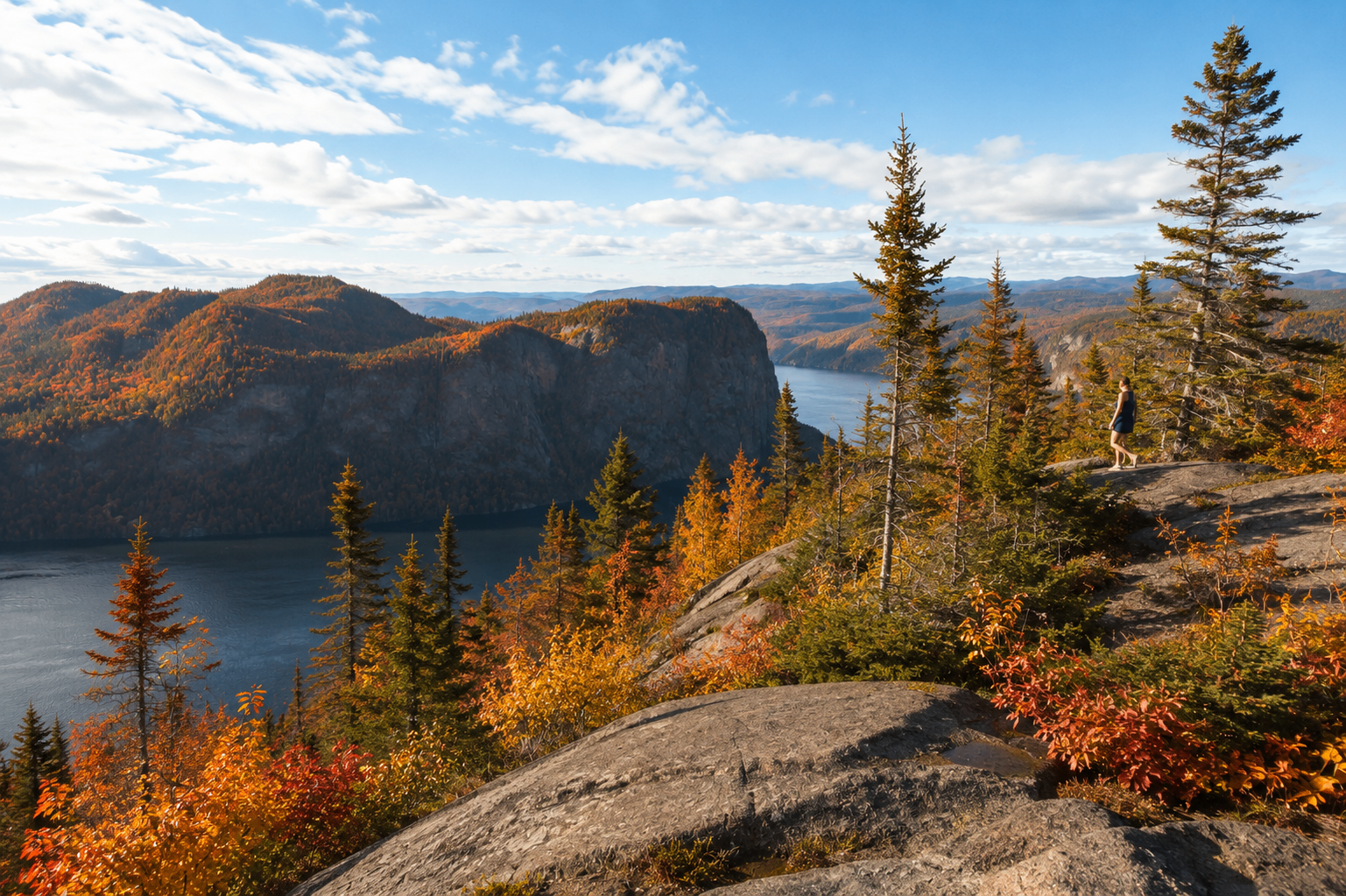
Tourism pressure. Gaspé draws hundreds of thousands of visitors annually — Forillon National Park, Percé Rock 80km away, world-class sea kayaking and hiking. A portion of the residential housing stock has been converted to seasonal and short-term rentals, shrinking the long-term supply further.
The mayor's own words. Gaspé Mayor Daniel Côté stated publicly in 2024 that even after a slight vacancy improvement to 1%, "the needs are still acute." And regional data from the Observatoire GÎM — rents ranging from $423/month in Percé to $723 in the Magdalen Islands — illustrates a whole region under pressure, not just one city.
The Projects: Responses Are Starting to Materialize
Han-Logement Gaspé — 32 adapted units (delivered July 2025)
The most thoroughly documented project. In August 2024, the Quebec and Canadian governments, Desjardins, the City of Gaspé, and non-profit Han-Logement broke ground on 32 social and affordable housing units on Rue Forest in Gaspé.
The $10.3 million project — part of the Desjardins Affordable Housing Initiative, a provincial-private partnership targeting 1,750 affordable units across Quebec — will house people living with physical or intellectual disabilities or autism spectrum disorder. Four buildings will contain 24 one-bedroom and 8 two-bedroom units. All tenants benefit from Quebec's Rent Supplement Program, capping their housing costs at 25% of income (90% covered by the SHQ, 10% by the City of Gaspé). The City donated the $443,000 land as its contribution.
First tenants moved in July 1, 2025. A second phase of 32 additional units at the same location was under consideration for 2025–2026, which would bring the Han-Logement total in Gaspé to 64 units.
Regional Program — 120 units across the Gaspésie (2024)
In April 2024, the federal and provincial governments jointly announced 120 new social and affordable housing units across the broader Gaspésie region, targeting families, singles, independent seniors, and people with disabilities.
Prefabricated Housing Initiative — 84 units in the Gaspésie/BSL (summer 2026)
An August 2025 announcement added another dimension: the Quebec and Canadian governments announced 84 highly prefabricated housing units across the Gaspésie and Bas-Saint-Laurent regions, through the Initiative for Highly Prefabricated Multi-Unit Housing. Three projects in Paspébiac, Grande-Vallée, and Cap-Chat are slated for delivery as early as summer 2026. The modular construction approach cuts typical timelines by several months.
The Private Market Challenge
The social and affordable housing announcements are encouraging, but they address only part of the problem. The private rental market in Gaspé remains tight, and market-rate rents continue to reflect that scarcity.
For people arriving in Gaspé without emergency resources — healthcare professionals posted to the Gaspé hospital, teachers at the Cégep, regional civil servants — the situation remains difficult. Available private market units frequently rent above the $703/month CMHC average because of scarcity.
Practical advice: if you're moving to Gaspé for work, start your search 3–4 months in advance. Use every channel available: Rentack, local Facebook groups ("Appartements à louer Gaspé et région"), community notice boards, and your professional network. In a market this small, word of mouth often beats any online platform.
Where to Look
Downtown Gaspé (Boulevard de York / Rue de la Reine area) — Highest concentration of long-term rental stock. Walking distance to the hospital and most services.
Sandy Beach sector — Residential west of the core, some duplexes and houses that occasionally circulate. Less dense, sometimes quieter.
Rivière-au-Renard and L'Anse-au-Griffon — Villages 20–30km north of Gaspé. Occasionally lower rents, but a car is essential.
Looking Ahead
The cumulative pipeline — 32 Han-Logement units delivered (and 32 more possible), 84 regional prefab units arriving summer 2026, and 120 units from the provincial program — represents a real response to a documented crisis. If everything comes through on schedule, Gaspé and the broader region will see meaningful affordable housing additions by the end of 2026.
The open question is the private market. Without new construction in the mid-market segment — accessible duplexes and small apartment buildings — rent pressure will persist for tenants who don't qualify for social programs.
Sources: CMHC Rental Market Reports 2023 and fall 2024; Radio-Canada Gaspésie; Gaspésie Nouvelles, August 2024; Government of Quebec press releases August 2024 and August 2025; CMHC press release April 2024; Observatoire GÎM. Compiled by Rentack, July 2026.
Apartments in Gaspé: https://www.rentack.com/apartments-for-rent/gaspe. Landlords: list free at dashboard.rentack.com.