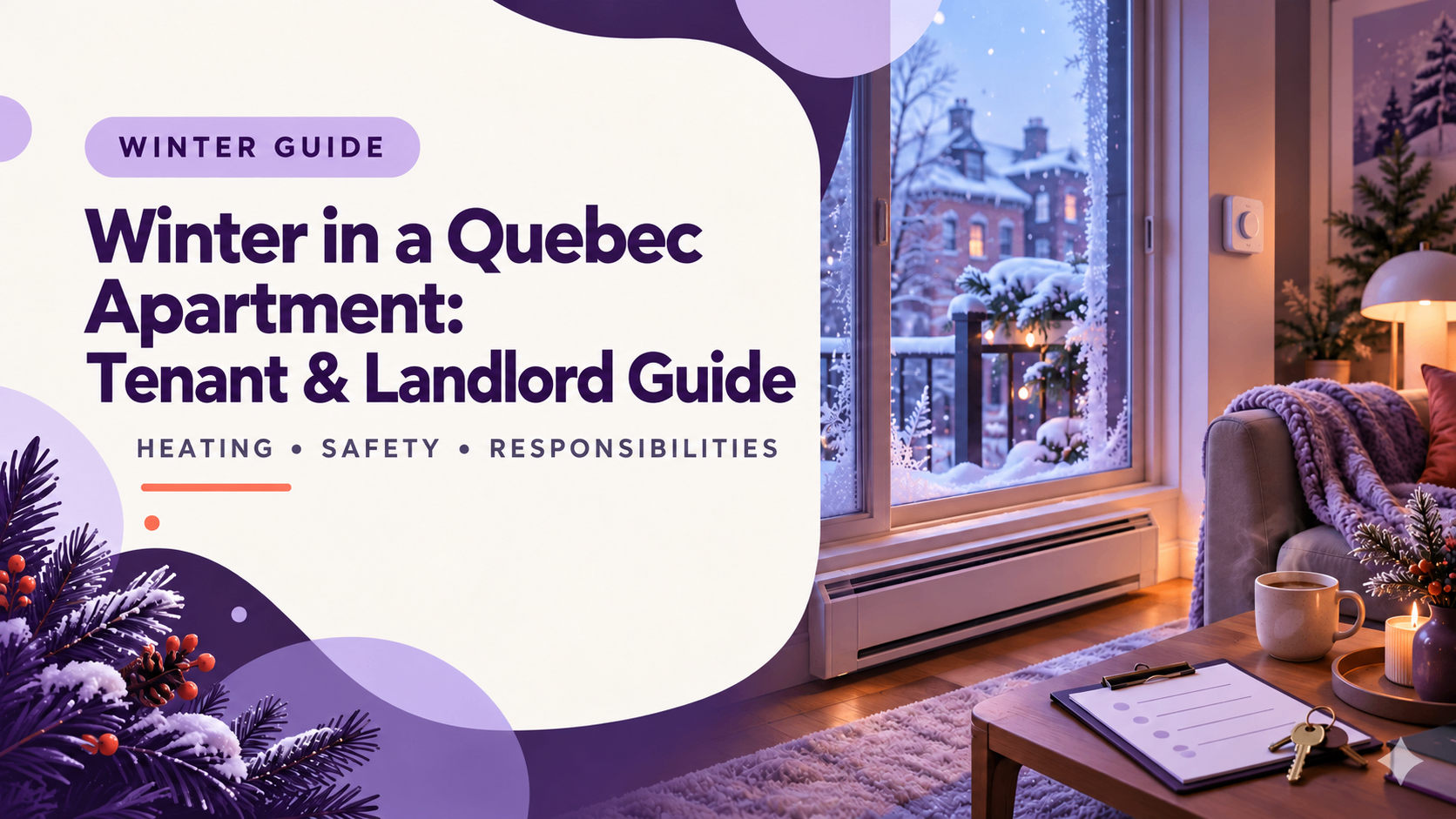
Quebec winters are long, and an apartment that is well prepared in the fall makes the season easier for everyone. Most winter issues in rental housing come down to four things: heating, snow and ice, humidity, and pipes. Knowing who handles what, and preparing early, avoids most problems before they start.
This guide covers the main responsibilities of tenants and landlords in winter, based on guidance from the Tribunal administratif du logement (TAL) and Éducaloi, along with a simple checklist for each side.
The short answer
- Aim for about 21°C. The TAL considers an indoor temperature of about 21°C adequate in the cold season.
- Who pays for heating depends on the lease. If heating is included, the landlord keeps the unit warm. If the tenant pays, the tenant keeps the heat at an adequate level.
- Heating must be kept on, even when you are away, to protect the building from frozen pipes and damage.
- Snow removal on balconies and stairs depends on the lease. Section E of the standard lease says who is responsible.
- Humidity is a shared effort. Tenants ventilate; landlords fix leaks and keep ventilation working.
- The best time to prepare is October and November, before the first deep cold.
Heating: what each side handles
The lease decides who pays for heating. Either way, the goal is the same: an adequate temperature that keeps the unit comfortable and the building safe.
If heating is included in the rent (the landlord pays):
- The landlord must keep the unit at an adequate temperature for the whole lease, whatever the date.
- A lease clause that sets a "heating start date" cannot be used to delay heating.
- The heating system must be kept in working order at all times.
If the tenant pays for heating:
- The tenant keeps the temperature adequate, without overheating.
- Heating equipment should be used normally. Airing a room for a few minutes is fine, but leaving windows open for hours in winter is not.
- The heat must stay on during an absence, even a short trip, to prevent frozen pipes.
What "adequate" means: no law sets an exact minimum, but the TAL has recognized that about 21°C is appropriate in normal winter conditions.
If the heating stops working:
- The tenant tells the landlord right away, ideally by phone and in writing.
- The landlord arranges the repair promptly.
- If the repair cannot be done right away, the landlord provides temporary heating, such as electric space heaters.
Our guide to electricity costs in Quebec apartments explains what heating typically costs when the tenant pays.
Snow and ice
Snow removal is one of the most common winter questions, and the answer is usually written in the lease.
- Check section E of the standard lease. It states who clears the balconies, exterior stairs and entrances, and sometimes who spreads salt or abrasive.
- Shared stairs and balconies are often a shared task between neighbours, depending on what the lease says.
- Landlords must take reasonable measures, such as hiring a snow removal contractor. Courts have recognized that this is an obligation of means: a landlord is not expected to clear ice within minutes of it forming.
- Everyone has a role in safety. Tenants should take normal winter precautions and report icy or dangerous spots quickly.
- Don't push snow onto the street or sidewalk. Most Quebec municipalities prohibit it.
Our Quebec standard lease guide shows where to find section E.
Humidity, condensation and mould
Condensation on windows is common in Quebec winters. A little is normal, but too much can lead to mould. Health Canada recommends keeping indoor relative humidity between 30% and 55%.
What tenants can do:
- Run the bathroom fan during and after showers, and the range hood while cooking.
- Avoid drying large amounts of laundry indoors without ventilation.
- Keep furniture slightly away from exterior walls so air can circulate.
- Wipe condensation from windows and report any water infiltration or persistent mould.
What landlords handle:
- Repair leaks in the roof, walls, windows and plumbing.
- Keep bathroom fans and other ventilation in working order.
- Address the cause of persistent mould, not just the surface.
Frozen pipes and absences
Frozen pipes can cause serious water damage to your unit and your neighbours'. They are almost always preventable.
- Never turn the heat off, even for a weekend away. Lower it a few degrees instead.
- Keep cabinet doors open under sinks on exterior walls during very cold nights.
- For longer trips, let the landlord know and leave a contact in case of emergency.
- Landlords should insulate exposed pipes in unheated spaces, such as crawl spaces and garages, and know where the main water valve is.
Tenant insurance can also protect your belongings in case of water damage. Our guides on tenant insurance in Quebec explain what it covers.
Fall checklist for tenants
- Test your heaters and thermostats before the first cold night.
- Check windows and doors for drafts, and tell your landlord if weatherstripping needs replacing.
- Confirm in your lease who clears the balcony and stairs.
- Sign up for Hydro-Québec's equal payments plan if you pay for heating.
- Buy a small ice scraper and salt for your entrance if snow removal is your responsibility.
- Save your landlord's phone number and the emergency contact for the building.
Fall checklist for landlords
- Inspect and service heating systems, including baseboard heaters and boilers.
- Replace worn weatherstripping and check window seals.
- Confirm your snow removal contract, and share the schedule with tenants.
- Clear gutters and check for roof or flashing issues before snow builds up.
- Insulate exposed pipes and test bathroom fans.
- Give tenants a simple winter contact sheet: who to call for heating, snow and emergencies.
A short email to tenants in November with the building's winter information goes a long way toward a smooth season.
FAQ
What is the minimum temperature for an apartment in Quebec?
No law sets an exact minimum, but the Tribunal administratif du logement considers about 21°C to be an adequate indoor temperature in the cold season.
Who pays for heating in a Quebec apartment?
It depends on the lease. If heating is included, the landlord pays and must keep the unit at an adequate temperature. If it is not included, the tenant pays Hydro-Québec directly.
Can I turn off the heat when I go on vacation?
No. The heat must stay on during an absence to prevent frozen pipes and damage. You can lower it a few degrees instead.
Who clears the snow from balconies and stairs?
It depends on the lease. Section E of Quebec's standard lease states whether the landlord or the tenant is responsible for snow removal on balconies, stairs and entrances.
What should I do if the heating stops working?
Tell your landlord right away, by phone and in writing. The landlord should arrange the repair promptly and provide temporary heating, such as space heaters, if the repair takes time.
How can I reduce condensation on my windows in winter?
Use the bathroom fan and range hood, avoid drying lots of laundry indoors, keep furniture slightly away from exterior walls and keep indoor humidity between 30% and 55%.